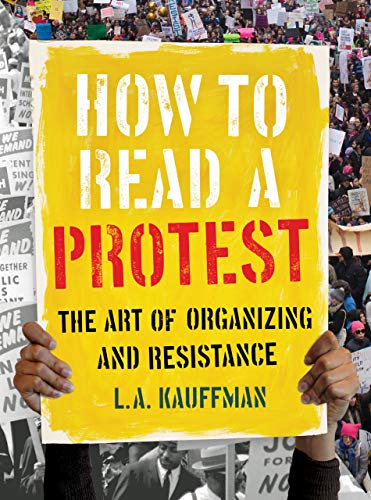
How to Read a Protest: The Art of Organizing and Resistance
A grassroots organizer and journalist examines the mechanics of major American demonstrations from 1963 to present, using protest signs as clues to how movements are organized and what makes them effective. Essential for understanding the logistics behind mass mobilization.
Key Takeaways
- Detailed analysis of protest mechanics from 1963 to present
- Uses protest signs as forensic evidence of organizing structure
- Covers logistics of mass mobilization and movement coordination
- Historical case studies of effective vs ineffective demonstrations
- Written by a grassroots organizer with decades of field experience
Most books about protest focus on ideology. Kauffman focuses on logistics — how demonstrations are actually put together, who makes them work, and what separates a march that changes policy from one that changes nothing. If you attend protests, this teaches you how to read what's happening around you.
L.A. Kauffman is a grassroots organizer and journalist who has participated in and covered American protest movements for over three decades. Her work focuses on the practical mechanics of mass mobilization rather than abstract political theory.
Companion organizing texts:
Related Books
Direct Action
A twenty-five-year history of disruptive protest in America, tracing the evolution of tactics from ACT UP to Occupy to Black Lives Matter through hundreds of candid interviews with movement insiders. Covers the operational mechanics of blockades, occupations, and mass campaigns.
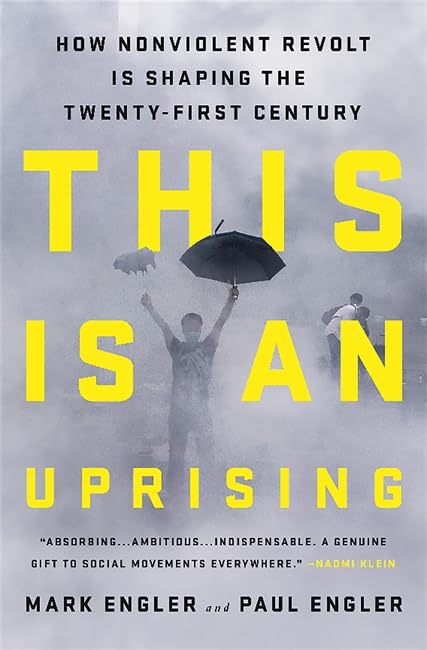
This Is an Uprising
Updated edition examining the hidden organizational structure behind movements that appear spontaneous — from the Arab Spring to BLM to anti-Trump resistance. Traces the strategic principles used to spark and sustain transformative unrest, with detailed analysis of how escalation and disruption are choreographed.
No Shortcuts
A veteran labor and community organizer distinguishes between mobilizing and organizing — and argues that progressive movements keep failing because they substitute the former for the latter. Includes detailed case studies of strikes and campaigns that built durable power versus those that burned out.
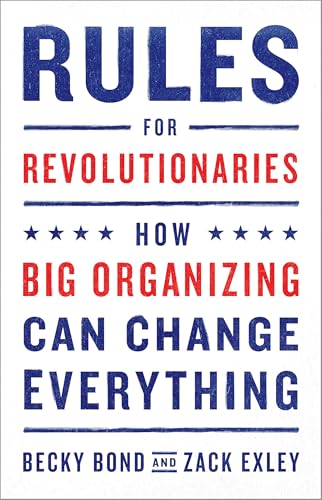
Rules for Revolutionaries
Digital strategists from the Bernie Sanders campaign identify 22 rules of 'Big Organizing' drawn from running one of the most ambitious grassroots operations in American political history — covering volunteer coordination, distributed logistics, and how to scale participation without losing coherence.
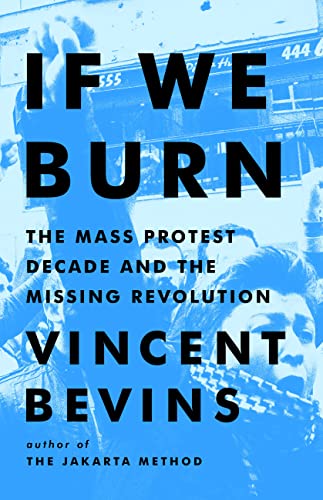
If We Burn
An award-winning journalist interviews hundreds of participants from a dozen countries to answer why the 2010s mass protest decade — the Arab Spring, Gezi Park, Euromaidan, Hong Kong, Chile — produced the opposite of what protesters demanded. A forensic post-mortem on movement logistics and political outcomes.

The End of Protest
The co-creator of Occupy Wall Street argues that conventional mass protest is broken and proposes eight principles of tactical innovation for the next generation of social movements. Draws on firsthand experience with Occupy's spread to 82 countries to diagnose why logistics-heavy horizontal protests stall.
Intelligence Briefings
intelligence
The Silent Watchers: Surveillance Tech Deployed Against Seattle Protesters
Invalid Date
Intelligence Briefing
Blind the Watchers: Inside Britain's Counter-Surveillance Uprising
Invalid Date
Intelligence Briefing
DO NOT READ THIS ARTICLE: An Archive of Britain's Cheekiest Counter-Surveillance Meme
Invalid Date
surveillance-intelligence
The Flock Safety Dossier: How a Startup Built America's Invisible Surveillance Empire
Invalid Date
Our Mission
InvisibleWare builds and curates counter-surveillance technology for activists, journalists, and anyone who refuses to accept mass monitoring as the cost of participation. We stock adversarial AI-disruption clothing, IR-blocking gear, Faraday equipment, and the essential books that explain why this work matters.
Your privacy is not a preference — it is a prerequisite for political freedom. Your data stays yours.