 Free to Read
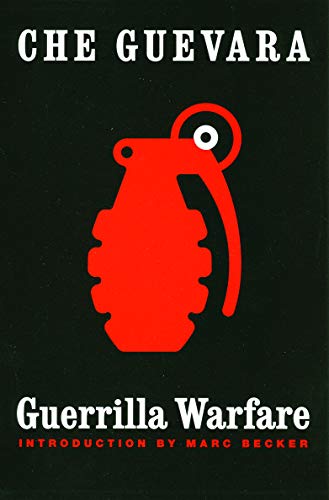
 Guerrilla Warfare — Field Doctrine from the Cuban Revolution
Guevara's operational manual distilled from the Cuban Revolution. Covers terrain selection, supply chain improvisation, sabotage operations, and the political preparation required before armed action. The companion text to Mao's theory — where Mao described the framework, Guevara described the field execution.
Key Takeaways
- Terrain analysis for guerrilla operations — jungle, mountain, urban
- Supply chain and logistics without conventional infrastructure
- Sabotage tactics and target selection principles
- Political preparation and population coordination
- Public domain — widely available on archive sites
Where Mao codified the theory, Guevara wrote the field manual. This is the operational complement — what terrain to choose, how to organize supply lines, when to strike, how to retreat. Required reading for anyone studying resistance operations, asymmetric conflict, or revolutionary movements.
Ernesto 'Che' Guevara was an Argentine-born revolutionary who served as a key military commander during the Cuban Revolution. His firsthand combat experience shaped this manual, which became one of the most widely read guerrilla warfare texts of the 20th century. He was killed in Bolivia in 1967 while attempting to replicate the Cuban model.
Further guerrilla warfare study:
Related Books
 Free to Read
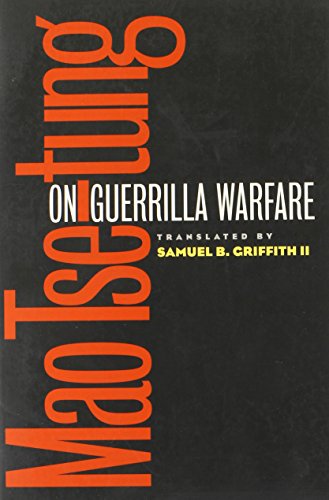
 On Guerrilla Warfare
The text that defined modern guerrilla warfare doctrine. Mao codified the three-phase theory of revolutionary war — strategic defensive, stalemate, and offensive — that influenced every insurgency and resistance movement of the 20th century, from Vietnam to Cuba to Afghanistan.

Invisible Armies
The definitive military history of guerrilla warfare spanning 5,000 years — from ancient Mesopotamian rebellions through the American Revolution, the French Resistance, Vietnam, Afghanistan, and modern insurgencies. Boot identifies the recurring patterns that make irregular forces succeed or fail against conventional armies.

War of the Flea
Taber's classic analysis of how small, lightly armed forces defeat large conventional armies through attrition, political mobilization, and psychological warfare. Draws from Cuba, Algeria, Vietnam, and dozens of other conflicts to identify the universal mechanics of guerrilla success.
 Declassified
 Guerrilla Warfare Handbook
The original U.S. Army field manual on guerrilla warfare and special forces operations. Covers organization, tactics, intelligence, and logistics for unconventional warfare campaigns. Declassified 1961 edition used as foundational doctrine for irregular warfare training worldwide.

The Art of Invisibility
The world's most famous hacker reveals how governments, corporations, and data brokers track your every move — and the exact techniques to disappear from digital surveillance, mass monitoring systems, and behavioral data extraction.

Extreme Privacy
Step-by-step system for eliminating your digital footprint from the ground up: burner device protocols, data broker mass-removal, anonymous addresses, virtual identities, and operational security methods used by intelligence professionals and journalists.
Intelligence Briefings
Intelligence Briefing
Blind the Watchers: Inside Britain's Counter-Surveillance Uprising
Invalid Date
Intelligence Briefing
DO NOT READ THIS ARTICLE: An Archive of Britain's Cheekiest Counter-Surveillance Meme
Invalid Date
surveillance-intelligence
The Flock Safety Dossier: How a Startup Built America's Invisible Surveillance Empire
Invalid Date
field-guide
The Propaganda Studies Reading List: 10 Books Ranked from Accessible to Academic
Invalid Date
Our Mission
InvisibleWare builds and curates counter-surveillance technology for activists, journalists, and anyone who refuses to accept mass monitoring as the cost of participation. We stock adversarial AI-disruption clothing, IR-blocking gear, Faraday equipment, and the essential books that explain why this work matters.
Your privacy is not a preference — it is a prerequisite for political freedom. Your data stays yours.