Showing 4 results for #chomsky

Media Control
A compact Chomsky pamphlet (~100 pages) and the ideal entry point into his political work. Traces American propaganda from Wilson's Creel Commission through the Iraq War, laying out his core thesis: 'Propaganda is to democracy what the bludgeon is to a totalitarian state.' Introduces the 'bewildered herd' concept and spectator democracy theory without the academic density of his major works.
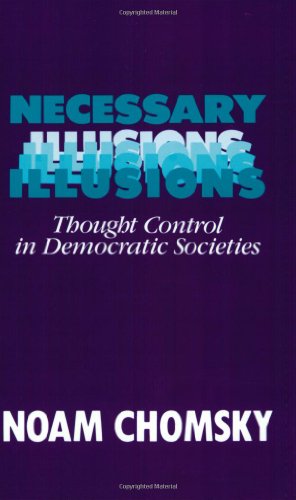
Necessary Illusions
Based on Chomsky's 1988 CBC Massey Lectures, this is the more analytically rigorous companion to Media Control. Examines how democratic societies maintain ideological control without physical coercion, using copious primary source documentation. The first 130 pages are lecture-derived and readable; the 220-page appendix is dense academic verification of every claim. Considered his most exhaustively sourced work.

Understanding Power
The most commonly recommended Chomsky starting point for readers who want breadth over depth — but earns its difficulty rating because of its length (416 pages) and subject range. Compiled from discussion transcripts, it covers US foreign policy, media analysis, social change theory, and domestic politics in digestible conversational segments. Footnotes are extensively cited and fact-checkable. Designed to be read non-linearly.

Manufacturing Consent
The landmark work in critical media studies. Herman and Chomsky's Propaganda Model identifies five structural filters — ownership, advertising, sourcing, flak, and anti-communism/fear — that systematically bias US media output toward elite interests without editorial conspiracy. Proven through detailed case studies comparing 'worthy' vs 'unworthy' victims in US foreign policy coverage. The most cited work in social sciences on media structure.