Showing 12 results for #political theory
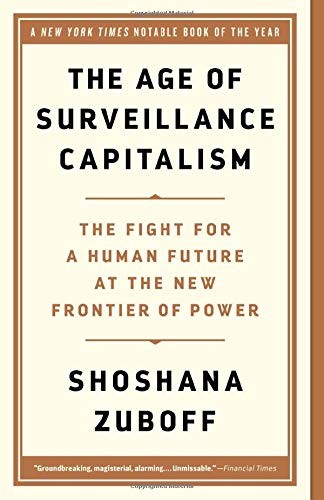
The Age of Surveillance Capitalism
Harvard scholar Zuboff documents how Google, Facebook, and Silicon Valley invented a new economic logic: the extraction of behavioral data to predict and modify human behavior at scale. The ideological framework behind every anti-surveillance countermeasure.

Privacy is Power
Oxford philosopher Véliz argues that privacy is not a preference — it is the prerequisite for political freedom, autonomous thought, and functioning democracy. The ethical and political framework for why counter-surveillance gear is an act of civic defense, not paranoia.
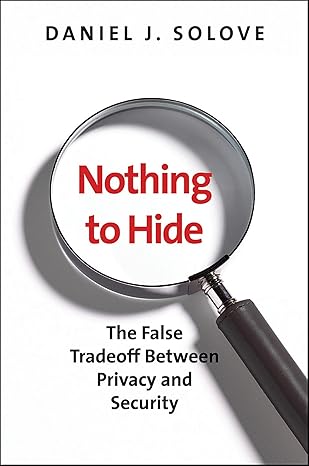
Nothing to Hide
Yale Law scholar Solove systematically dismantles 'if you have nothing to hide, you have nothing to fear' — the surveillance state's most powerful propaganda tool — and establishes a rigorous legal and philosophical framework for privacy rights.
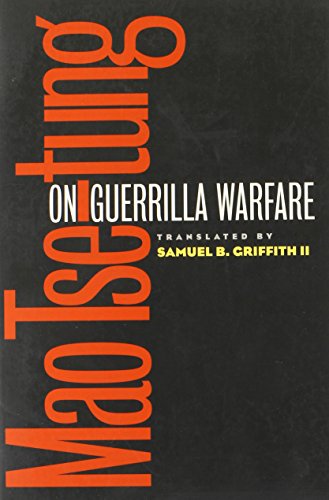 Free to Read
 On Guerrilla Warfare
The text that defined modern guerrilla warfare doctrine. Mao codified the three-phase theory of revolutionary war — strategic defensive, stalemate, and offensive — that influenced every insurgency and resistance movement of the 20th century, from Vietnam to Cuba to Afghanistan.
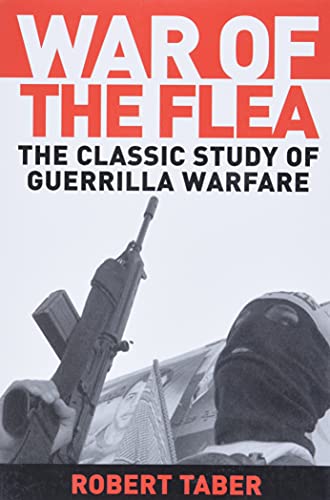
War of the Flea
Taber's classic analysis of how small, lightly armed forces defeat large conventional armies through attrition, political mobilization, and psychological warfare. Draws from Cuba, Algeria, Vietnam, and dozens of other conflicts to identify the universal mechanics of guerrilla success.
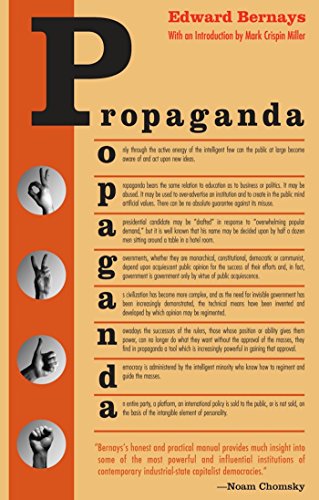
Propaganda (Bernays)
The founding document of modern public relations, written by Sigmund Freud's nephew. Bernays openly describes 'engineering of consent' as a necessary tool of democratic governance — mass manipulation framed as civic service. Short, direct, and eerily frank about the invisible government of public opinion shapers. Noam Chomsky called it 'an honest and practical manual.'

Media Control
A compact Chomsky pamphlet (~100 pages) and the ideal entry point into his political work. Traces American propaganda from Wilson's Creel Commission through the Iraq War, laying out his core thesis: 'Propaganda is to democracy what the bludgeon is to a totalitarian state.' Introduces the 'bewildered herd' concept and spectator democracy theory without the academic density of his major works.
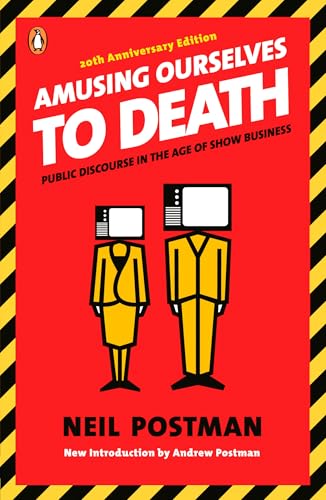
Amusing Ourselves to Death
Postman's 1985 argument that television had transformed public discourse from rational argument to entertainment spectacle. Contrasts Orwell's surveillance dystopia with Huxley's soma-fueled compliance — and argues we got Huxley's version. Remarkably prescient on social media, reality television, and the collapse of serious political conversation long before any of it existed.
Necessary Illusions
Based on Chomsky's 1988 CBC Massey Lectures, this is the more analytically rigorous companion to Media Control. Examines how democratic societies maintain ideological control without physical coercion, using copious primary source documentation. The first 130 pages are lecture-derived and readable; the 220-page appendix is dense academic verification of every claim. Considered his most exhaustively sourced work.

Understanding Power
The most commonly recommended Chomsky starting point for readers who want breadth over depth — but earns its difficulty rating because of its length (416 pages) and subject range. Compiled from discussion transcripts, it covers US foreign policy, media analysis, social change theory, and domestic politics in digestible conversational segments. Footnotes are extensively cited and fact-checkable. Designed to be read non-linearly.

Manufacturing Consent
The landmark work in critical media studies. Herman and Chomsky's Propaganda Model identifies five structural filters — ownership, advertising, sourcing, flak, and anti-communism/fear — that systematically bias US media output toward elite interests without editorial conspiracy. Proven through detailed case studies comparing 'worthy' vs 'unworthy' victims in US foreign policy coverage. The most cited work in social sciences on media structure.
Propaganda (Ellul)
The most intellectually demanding text on propaganda and arguably the most important. French sociologist Ellul argues that propaganda in modern technological society is not a tool of the state but an environmental condition — that educated, information-seeking citizens are the most susceptible, not the most resistant. His taxonomy distinguishes sociological vs political propaganda, integration vs agitation, and horizontal vs vertical forms. Counterintuitively devastating: the cure (education, media literacy) may accelerate the disease.